
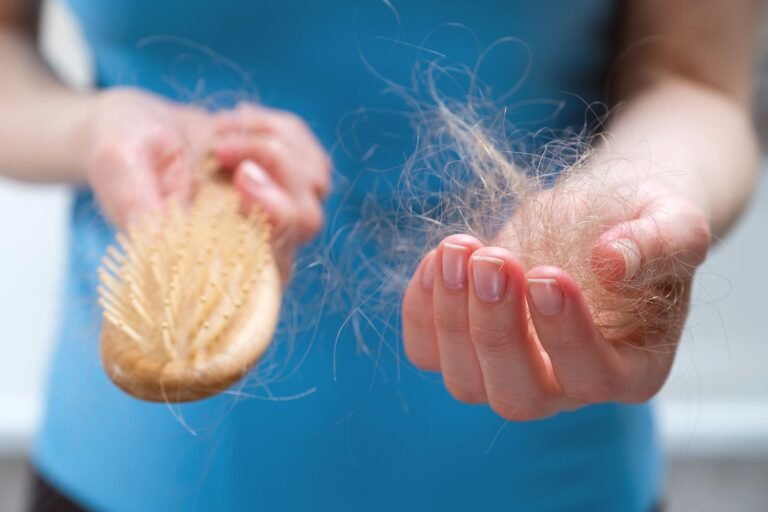
Finding hair on your pillow, in the shower or on your brush can be worrying. Before you panic, it helps to know what is normal and what is not.
Some Hair Fall Is Normal
Hair grows in cycles, so every day some hairs naturally reach the end of their life and fall out. Many sources say that losing somewhere around 50 to 100 hairs a day is common. You may notice more after washing or brushing, since loose hairs gather up. A steady amount that does not change is usually nothing to worry about.
Common Reasons for Increased Hair Fall
- Stress or illness: a stressful period, fever or surgery can cause more shedding a few months later.
- Diet: very low-calorie diets, or too little iron or protein, can affect hair.
- Hormonal changes: such as after pregnancy, or with thyroid problems.
- Harsh styling: frequent heat, bleaching, coloring and tight hairstyles can weaken or break hair.
- Scalp problems: dandruff or scalp irritation can contribute.
- Some medicines and medical conditions.
Breakage is also different from shedding. Shedding means the whole hair comes out with a small white bulb at the root, while breakage means the hair snaps partway along its length.
Habits That Can Help
- Handle wet hair gently. Hair is more fragile when wet. Use a wide-tooth comb and start from the ends.
- Avoid tight hairstyles such as tight ponytails or braids that pull on the roots.
- Go easy on heat and chemicals. Use a heat protectant, and give your hair breaks between treatments.
- Keep your scalp clean and healthy. Wash regularly with a gentle shampoo that suits your scalp.
- Eat a balanced diet with enough protein, fruits and vegetables.
- Manage stress and sleep well, as both affect the body, including hair.
What Not to Do
Be careful with products that promise to regrow hair overnight. There is no quick fix, and many claims are not supported by evidence. Avoid starting a lot of supplements on your own, since too much of some vitamins can cause problems.
When to See a Doctor
Talk to a doctor or dermatologist if you notice any of these:
- Sudden or heavy hair loss
- Bald patches or a widening parting
- Hair loss together with itching, pain, redness or scaling on the scalp
- Hair loss along with tiredness, weight changes or other symptoms
A doctor can check for causes such as low iron or thyroid problems and suggest proper treatment.
The Short Version
Some shedding is normal. If it increases, look at stress, diet and hair habits first, be gentle with your hair, and see a doctor if the loss is sudden, patchy or comes with other symptoms.
This article is for general information and is not medical advice. See our Disclaimer for details.