Everyday makeup does not need to be complicated, time-consuming, or expensive. A few carefully chosen products can help you create a fresh, natural look that feels comfortable for work, university, shopping, meetings, or everyday activities.
The goal of everyday makeup is not to cover every part of your face. Instead, it is to enhance your natural features, even out your complexion where needed, add a little color, and help you feel confident without using too many products.
If you are new to makeup, you do not need a professional brush collection or a full-coverage foundation to get started. With a simple routine and a little practice, you can create a polished look in around 10–15 minutes. You can also adjust the steps according to your skin type, personal style, and the amount of coverage you prefer.
In this guide, you will learn how to prepare your skin, apply a light base, define your eyes and brows, add color to your cheeks and lips, and make your makeup last comfortably throughout the day.
1. Prepare Your Skin Before Applying Makeup
Good makeup starts with skin preparation. When your skin is clean and comfortably moisturized, foundation and other complexion products may apply more evenly. Skipping preparation can sometimes make makeup cling to dry patches or appear uneven.
Start by cleansing your face with a gentle cleanser that suits your skin type. You do not need to scrub your skin or use a strong exfoliating product before everyday makeup.
Next, apply a moisturizer. If you have oily skin, choose a lightweight formula that feels comfortable without leaving a heavy residue. If your skin is dry, a richer moisturizer may help reduce the appearance of flaky areas.
During the daytime, finish with broad-spectrum sunscreen with SPF 30 or higher. Apply it according to the product instructions and allow it to settle before moving on to makeup. Makeup products that contain SPF should not automatically replace your regular sunscreen because people may not apply enough foundation to achieve the labeled protection.
Give your skincare products a few minutes to settle, especially if your face feels wet or slippery. The exact waiting time depends on the products you use.
Beginner tip: Keep your skincare routine simple before makeup. Too many layers can sometimes cause products to pill or roll off the skin.
2. Apply a Light Foundation or Tinted Moisturizer
For an everyday look, a light and comfortable base is usually enough. You can choose a foundation, tinted moisturizer, skin tint, or another complexion product depending on your preferred coverage.
If your skin already looks even and you do not want much coverage, you can skip foundation completely.
To apply your base:
- Start with a small amount of product.
- Place it around the center of your face, where you may want the most coverage.
- Blend gently outward toward your cheeks, forehead, and jawline.
- Use a clean makeup sponge, suitable brush, or clean fingertips according to the product instructions.
- Add another thin layer only where you need more coverage.
Thin layers often create a more natural result than applying a large amount of foundation at once.
Pay attention to the jawline and hairline, where unblended product can leave visible edges. Check that the foundation shade matches your skin rather than making your face noticeably lighter or darker than your neck.
If you are unsure how to select a matching shade, read our guide on how to choose the right foundation shade. Replace this link if your published article uses a different URL.
Remember: Everyday makeup should feel comfortable on your skin. You do not need full coverage to achieve a neat, polished appearance.
3. Use Concealer Only Where You Need It
Concealer can provide extra coverage for dark circles, blemishes, redness, or uneven areas without requiring a thick layer of foundation across your entire face.
Choose a concealer based on your goal. A shade close to your skin tone is generally suitable for covering spots and redness. For the under-eye area, some people prefer a slightly brighter shade, but going too light can make the area look grey or overly highlighted.
Apply a small amount to the areas that need extra coverage.
For under-eye concealing, use a few small dots rather than a thick stripe. Gently tap the product with your fingertip, sponge, or brush until it blends into the surrounding skin.
For blemishes, place a little concealer directly on the spot and carefully blend the edges. Avoid rubbing repeatedly, as this can remove the coverage you have just applied.
If you have dry skin or visible texture under your eyes, use less product and avoid applying a thick layer. Too much concealer can settle into fine lines and make the area look heavier.
You can also skip concealer if your complexion already looks the way you like. The purpose is to create the amount of coverage you want, not to hide every natural mark on your skin.
4. Add Blush for a Fresh Appearance
Blush adds color to your cheeks and can make a simple makeup look appear more lively. You do not need much product; a small amount is often enough for everyday wear.
You can choose between cream, liquid, and powder blush.
- Cream blush: Often gives a soft, skin-like finish and can be convenient for a minimal routine.
- Liquid blush: Usually offers buildable color, although some formulas set quickly and need to be blended promptly.
- Powder blush: Can be easy to control with a brush and may suit people who prefer a powder-based finish.
Choose the formula that works well with your base and feels comfortable on your skin.
For application, start with a small amount on the cheeks. Blend the color gently upward and outward if you want a lifted appearance. You can also place blush closer to the apples of your cheeks for a softer, rounded effect.
The best placement depends on your face shape and the look you prefer, so experiment with small amounts rather than following a strict rule.
If you use cream or liquid blush, gently tap it into place instead of dragging it across your foundation. If you use powder blush, pick up a little product with a brush and tap off any excess before applying.
Beginner tip: Build the color gradually. It is much easier to add more blush than to remove an overly bright patch.
5. Shape and Define Your Eyebrows
Your eyebrows help frame your face, but everyday makeup does not require a sharply defined brow. A soft, natural finish is often easier to achieve and maintain.
Start by brushing your eyebrows into their natural shape using a clean spoolie brush. This helps you see where the hairs are sparse and where additional definition might be useful.
If you want more definition, use a brow pencil, powder, or tinted brow product that complements your natural brow color.
Apply light, short strokes in sparse areas instead of drawing one heavy line across the entire brow. Follow the natural direction of your brow hairs, and avoid making the inner corners too dark.
After filling in any gaps, brush through the brows again to soften the color.
You can finish with clear brow gel or a tinted gel if you want to keep the hairs in place. If your brows already have a shape you like, brushing them alone may be enough.
For a beginner-friendly result, remember that your eyebrows do not have to look perfectly identical. A little natural variation is normal, and softer brows can complement a light everyday makeup look.
6. Keep Your Eye Makeup Simple
You can define your eyes without using several eyeshadows, complicated eyeliner techniques, or false lashes.
For an easy everyday look, choose one or two products that suit your comfort level.
Option 1: Kajal or eyeliner
A thin line of kajal or eyeliner can add definition around the eyes. You can apply a small amount along the upper lash line for a subtle effect.
If you prefer a softer look, gently smudge a pencil liner along the upper lash line, provided the product is designed for that use.
Avoid applying products inside the eye unless they are specifically intended for that area. If your eyes are sensitive, choose suitable products and stop using them if irritation occurs.
Option 2: A neutral eyeshadow
A light brown, beige, taupe, or other neutral shade can add subtle dimension to the eyelids. Apply a small amount and blend the edges so that no harsh line remains.
You can skip eyeshadow entirely if you want a faster routine.
Option 3: Eyelash curling and mascara
If you use an eyelash curler, use it on clean, dry lashes before applying mascara. Position it carefully and squeeze gently without pulling.
Apply one thin coat of mascara, starting near the base of the lashes and moving the wand upward. A second coat is optional if you want more definition.
Allow the first coat to settle before adding another, and avoid repeatedly pumping the mascara wand in and out of its tube, as this can introduce air and may dry the product faster.
Replace eye makeup according to its labeling and discard products that change in smell or texture. Do not share mascara or eye pencils, and avoid using eye makeup if you have an eye infection.
7. Choose a Comfortable Lip Color
A simple lip product can complete your everyday makeup without making the look feel too formal.
Choose a formula based on how you want your lips to look and feel.
- Tinted lip balm: Adds a subtle wash of color while helping lips feel moisturized.
- Nude lipstick: Creates a polished look without drawing too much attention.
- Rose or pink lipstick: Adds a little color while remaining suitable for many everyday occasions.
- Soft brown or peach shades: Can complement a range of makeup styles, depending on your complexion and personal preference.
- Lip tint: Offers a lightweight option for people who prefer a stain-like effect.
There is no single lipstick color that suits every skin tone. If possible, test the color in natural light and consider how it looks with your natural lip color.
Before applying lipstick, make sure your lips are comfortable and not heavily flaky. A lip balm can help soften dryness. If you use a matte lipstick, applying a thin, even layer may help prevent the product from feeling too heavy.
For a softer finish, blot your lipstick gently with a clean tissue. If you prefer a more defined look, use a lip liner that closely matches your lipstick or natural lip color.
The best everyday lip shade is one you enjoy wearing and feel comfortable reapplying when needed.
8. Set Your Makeup Without Making It Look Heavy
Setting products can help your makeup wear more comfortably, but not everyone needs them.
If your forehead, nose, or chin becomes shiny during the day, apply a small amount of setting powder to those areas. Use a clean, fluffy brush or a suitable powder puff, and remove excess product before applying it.
Avoid applying a thick layer across your entire face if you prefer a natural finish. Too much powder can make skin look dry or emphasize texture, especially around the nose and under the eyes.
If your skin is dry, you may prefer to skip powder on most areas and use it only where necessary. If you have oily skin, a light application may help reduce shine, although it will not prevent oil production completely.
Setting spray is another optional choice. Some formulas are designed to help makeup wear longer or change its finish, but results vary by product. Follow the directions on the label and avoid spraying directly into your eyes.
You can also skip both powder and setting spray if your makeup already looks good and feels comfortable.
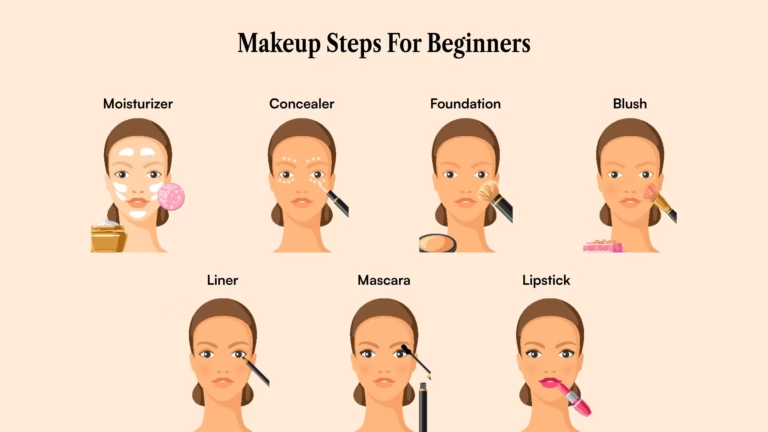
9. Follow the Right Order for Everyday Makeup
Knowing the general application order can make your routine easier, especially when you are learning how different products work together.
Here is a simple sequence you can follow:
- Cleanser
- Moisturizer
- Sunscreen during the day
- Primer, if desired
- Foundation or tinted moisturizer
- Concealer
- Blush
- Brow product
- Eyeshadow, eyeliner, or kajal
- Mascara
- Lip color
- Setting powder or spray, if needed
This order is flexible. For example, some people prefer applying powder blush after setting their base, while others use cream blush before powder. You can also do your eye makeup before your base if you want to clean up any fallen eyeshadow.
Follow the instructions for your particular products, and adjust the routine as you discover what works best for you.
10. Adapt Your Everyday Makeup to Your Skin Type
The same makeup routine may not feel equally comfortable for everyone. Your skin type, climate, skincare products, and personal preferences can all influence how your makeup looks throughout the day.
For oily skin: Consider a lightweight base and apply powder selectively to areas that become shiny. Avoid adding too many layers in an attempt to control oil.
For dry skin: Focus on comfortable skin preparation and choose complexion products that do not emphasize flaky areas. Use powder sparingly if it makes your skin look dry.
For combination skin: Apply products according to the needs of different areas. You may prefer a lighter base overall and a little powder on the forehead or nose.
For sensitive skin: Choose products that suit your known sensitivities, introduce new items gradually, and avoid products that cause burning or persistent irritation. Fragrance-free options may be helpful for some people, but individual reactions vary.
For acne-prone skin: Use products that are labeled non-comedogenic when appropriate, remove makeup thoroughly, and avoid repeatedly layering heavy products over blemishes. Makeup does not need to be avoided altogether, but the formula and removal routine matter.
If you experience persistent irritation or a skin problem that does not improve, consider seeking advice from a qualified healthcare professional.
11. Make Your Everyday Makeup Last Longer
You do not need to carry your entire makeup collection to maintain a fresh look throughout the day. A few practical habits can help.
Use thin layers. Applying a small amount of each product can reduce the chance of makeup looking thick or uneven.
Allow skincare to settle. If your moisturizer or sunscreen is still very slippery, your base may be harder to blend. Give products time to settle according to their instructions.
Avoid touching your face frequently. Rubbing or touching your face can disturb makeup and transfer oil or dirt onto the skin.
Use blotting paper if needed. If your skin becomes shiny, gently press blotting paper against the area rather than rubbing it. Apply a little powder afterward only if you want additional shine control.
Carry your lip product. Lip color often fades with eating and drinking, so a quick touch-up may be all you need.
Check your makeup in natural light. Before leaving, look for unblended foundation around the jawline, visible powder buildup, or uneven blush. A quick check can help you correct small issues.
Keep expectations realistic: makeup wear time varies with the formula, skin type, weather, activity, and application method. No routine will remain completely unchanged all day.
12. Keep Your Makeup Tools Clean
Clean makeup tools are an important part of a good everyday routine. Brushes and sponges can collect makeup residue, oil, and dirt, particularly when they are used frequently.
Wash reusable brushes and sponges regularly with a suitable cleanser, following the manufacturer’s instructions. Rinse them thoroughly and allow them to dry completely before using them again.
Do not leave damp sponges stored in closed containers, as they need to dry properly between uses. Avoid sharing makeup brushes, sponges, mascara, or other products that come into direct contact with the face and eyes.
Check the packaging for product-specific storage and replacement instructions. If a product changes in smell, color, or texture, or causes an unexpected reaction, stop using it.
At the end of the day, remove your makeup gently with a suitable cleanser or makeup remover. Pay attention to the lash line and other areas where product may remain, but avoid harsh rubbing. Follow with your usual skincare routine.
Removing makeup before sleeping helps reduce product buildup and allows you to start the next day with clean skin.
Conclusion
An everyday makeup look can be simple, quick, and comfortable without requiring a long list of products. Start with clean, moisturized skin and sunscreen, apply a light base if you want coverage, and use concealer only where needed. Add a little blush, define your brows, choose simple eye makeup, and finish with a lip color you enjoy.
Setting powder, primer, eyeshadow, and setting spray are optional. You can skip any step that does not suit your preferences or routine.
As you gain experience, you will discover which products work best for your skin and which steps make the biggest difference to your look. Focus on blending, use small amounts of product, and check the result in natural light.
The purpose of everyday makeup is not to change your face completely. It is to create a look that feels like you—fresh, comfortable, and ready for the day.
This article is for general information and is not medical advice. See our Disclaimer for details.